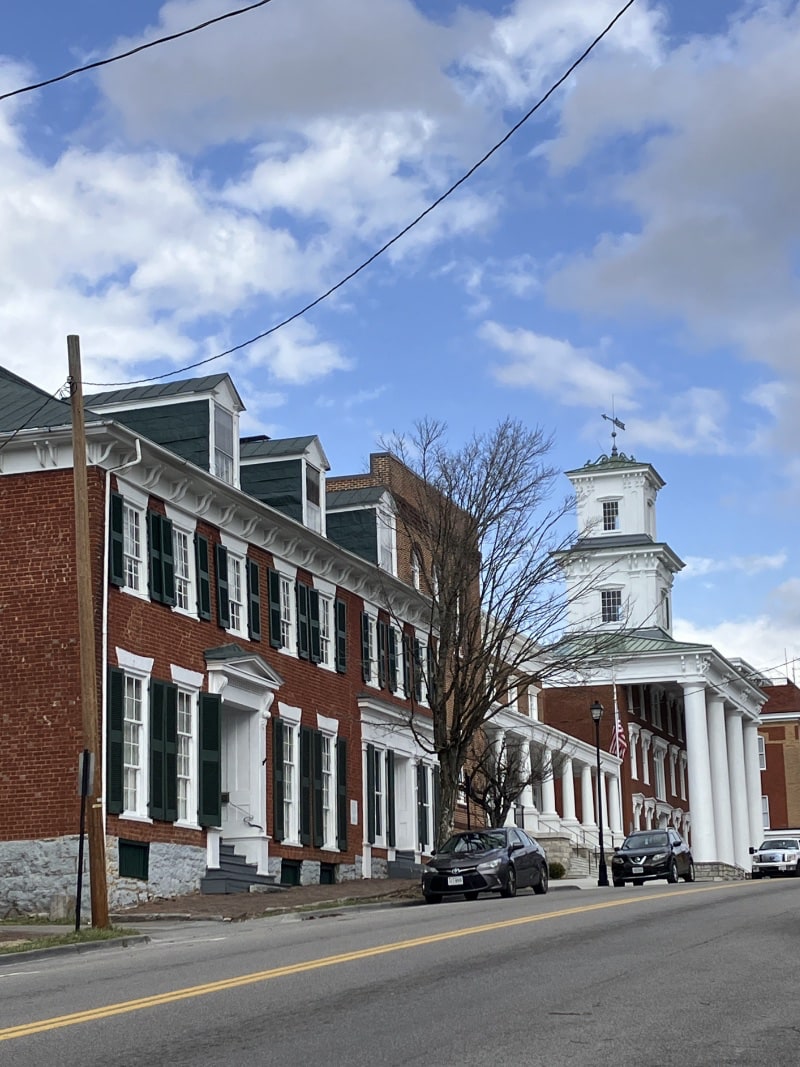
Abingdon Historic District
The downtown Abingdon Historic District was listed on the National Register in early 1970s. It is part of a cohort of first-generation designations, listed within four years of the establishment of the National Register program. The nomination was typical of those from that period totaling only 5 pages, one of which was a map. In the intervening years nominations have expanded beyond a means to an end to contain drastically more information supporting the arguments for designation and providing a complete description of the resource. Working in collaboration with the William and Mary Center for Archaeological Research, Hanbury Preservation Consulting prepared additional information for the district that in essence replaces the previous nomination. The new nomination is 68 pages excluding maps and contains a comprehensive inventory of primary and secondary resources with descriptions and contributing status noted; a definitive period of significance; and designation under three criteria and five areas of significance. Accompanying photographs and maps provide an updated view of the district and a clearly defined boundary.
The district is located largely along Main Street, the primary artery of the town, which like so many in western Virginia are linear communities that stretch along the Great Valley Road. A courthouse town, Abingdon emerged as a regional commercial center. The district contains buildings in a variety of architectural styles from Federal to Craftsman, including many by notable local and regional architects listed in the nomination. It is significant for its association with John B. Floyd who served as governor and the U.S. Secretary of War; entrepreneur and merchant William King who established a regional saltworks; and Robert Porterfield, an actor who returned to the region from New York during the Great Depression and established the Barter Theatre. The continued success of the theater gives the district significance in the area of the performing arts.
The revised nomination, accepted in 2026, can be found here.